
Nostalgia
Rohan entered the party hall with a pounding heart and heavy steps. Even after six years of separation all he longed for was a glimpse of those deep black eyes and fuller lips, that one face hers. Among the various standing figures he saw Ananya – nervously pretentious of being participative among them. One glance and he drank her presence along with her need of him. They had just parted ways not hearts…
Here is my humble try at recording Teri khushboo main base khat
जिनको दुनिया की निगाहों से छुपाए रखा
जिनको इक उम्र कलेजे से लगाए रखा
दीन जिनको जिन्हें ईमान बनाए रखा
तूने दुनिया की निगाहों से जो बचकर लिखे
साल हा साल मेरे नाम बराबर लिखे
कभी दिन में तो कभी रात को उठकर लिखे
तेरे खु़शबू में बसे ख़त मैं जलाता कैसे
प्यार में डूबे हुए ख़त मैं जलाता कैसे
तेरे हाथों के लिखे ख़त मैं जलाता कैसे
तेरे ख़त आज मैं गंगा में बहा आया हूँ
आग बहते हुए पानी में लगा आया हूँ
Translation:
Hidden from the eyes of the world, they were kept
Close to my heart for an age, they were kept
As my faith and conscience, they were kept
Close to my heart for an age, they were kept
As my faith and conscience, they were kept
Concealed from the world, you wrote them
Year after year, in my name, you wrote them
During the day, sometimes at night you wrote them
Steeped in your fragrance, these letters how could I burn
Immersed in love, these letters how could I burn
Written by your hands, these letters how could I burn
Your letters afloat in the Ganga I have set
On fire, the flowing waters I have set
Lyrics and translation: Source
Ahista Ahista – my recording
I have tried to record Amir Meenai’s ghazal Ahista Ahista, hope you like it.
सरकतिी जाए है रुख्ह से नक़ाब आहिस्ता आहिस्ता
निकलता आ रहा है आफताब आहिस्ता आहिस्ता
जावां होने लगे जब वो तो हम से कर लिया परदा
हया यकलख्ह्त आईइ और शबाब आहिस्ता आहिस्ता
शब-ए-फुर्कत का जागा हूँ फरिश्तों अब तो सोने दो
कभी फ़ुर्सत में कर लेना हिसाब आहिस्ता आहिस्ता
हमारे और तुम्हारे प्यार में बस फ़र्क है इतना
इधर तो जल्दी जल्दि है उधर आहिस्ता आहिस्ता
वो बेदर्दी से सर काटे “अमीर” और मैं कहु उन से
हुज़ूर आहिस्ता आहिस्ता, जनाब आहिस्ता आहिस्ता
Unison – sensual emotions
A sensuous poem in English and Hindi.

And the Hindi version of it, version because I have not translated but written on the same theme.

Soulmate – an Etheree

Soulmate
Old Oak
Commitment
You there always
Around, beside me
Reside deep inside me
Nights sultry and days splendid
Wake up to life better than dreams
Years together winter summer rain
You there unnoticed but necessary
The poetry form, Etheree, consists of 10 lines of 1, 2, 3, 4, 5, 6, 7, 8, 9, 10 syllables. Etheree can also be reversed and written 10, 9, 8, 7, 6, 5, 4, 3, 2, 1. Get creative and write an Etheree with more than one verse, but follow suit with an inverted syllable count.
Reversed Etheree: 10, 9, 8, 7, 6, 5, 4, 3, 2, 1
Double Etheree: 1, 2, 3, 4, 5, 6, 7, 8, 9, 10, 10, 9, 8, 7, 5, 4, 3, 2, 1
…Triple Etheree, Quadruple Etheree, and so on!
Yeh Nayan Dare Dare
नयन तुम्हारे हम पर जादू कर देंगे
न पता था वोही इस तरह ठग लेंगे
हमने सोचा उन बाँध नयन मैं होगी हमारी शरण
पता न था बेघर कर जाएँगे हमें यूँही बेकारण
Happiness – A Haiku
 Haiku Rules:
An unrhymed Japanese poem recording the essence of a moment. Nature is combined with human nature. It usually consists of three lines of 5/7/5 (5 kana in the first line, 7 kana in the second line, and 5 kana in the third line) totaling seventeen kana.
A foreign adaptation of 1, usually written in three lines totaling 17 syllables or LESS.
Haiku is not written in the past, nor does it cover a long period of time.
Haiku usually contains a season word (called kigo). It is not a requirement, but season words are a big part of haiku.
Personal note: while I ain’t a pro at Haiku, I find some Haiku’s written devoid of anything to do with seasons or nature. While it may be completely a poet’s liberty and rightly so I personally find Haiku’s with a comparison of nature and human nature beautiful.
O’Lover – A Sedoka Poem

My first attempt at a Sedoka. The Katauta is an unrhymed Japanese form consisting of 17 or 19 syllables. The poem is a three-lined poem the following syllable counts: 5/7/5 or 5/7/7.
The Katauta form was used for poems addressed to a lover. A single katauta is considered incomplete or a half-poem, however, a pair of katautas using the syllable count of 5,7,7 is called a sedoka.
Welcome the Storm

T’was us t’was me and you
You promised me all my dreams come true
You promised me sunshine in winters
And be by me like autumn dew
I in turn stood by you in dusk and dawn
Took a thorny path of no return
We saw together the coming storm
I am sure you did protect me with no harm
When the storm hit me, I looked for your hand
Nowhere was your presence left me disdained
I faced the storm alone and strong
It taught me lessons of my wrong
You responded to none, my pain and my cries
Now all I wait is for this time to fly
All I look for now is strong commitment
One day, yes I wait for the day to get over this disenchantment.
Image Source: Photobucket

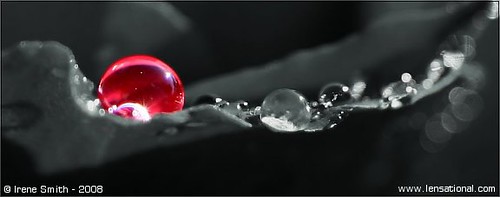
Seduction – A Haiku

Pearls of perspiration travel down your brow onto my shoulders
Like the dew drops trickle on a rose petal
धीरे धीरे …….मद्धम मद्धम
Image Source: Flickr
Note: Have taken a little leeway from the rules of a Haiku 🙂